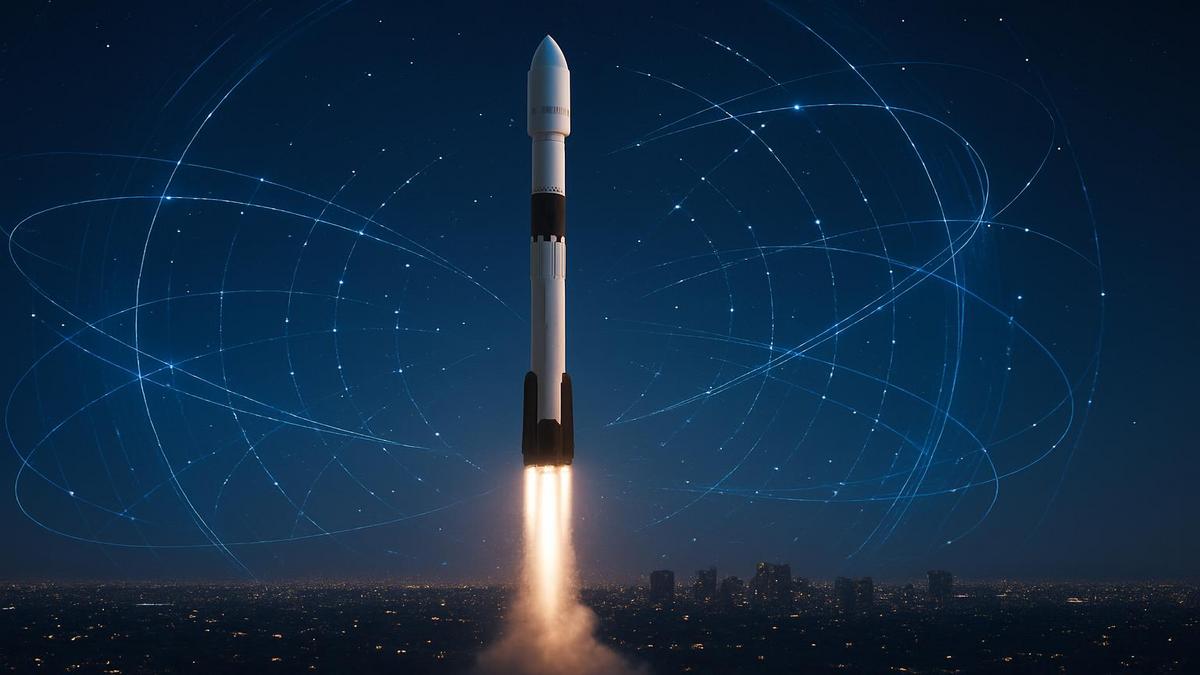
Shares of SpaceX (SPCX) declined sharply on Thursday, October 22, 2026, reversing gains made the previous day following its third-quarter earnings release. The stock dropped nearly 9%, weighed down by a broad selloff in technology stocks and fresh investor scrutiny of SpaceX’s elevated capital expenditure plans and debt burden.
Post-Earnings Stock Volatility and Market Context
SpaceX had rallied 7.8% on Wednesday after reporting robust third-quarter results, including a 161% year-over-year revenue growth driven by its Super Intelligence segment and Communications businesses, alongside upbeat commentary on artificial intelligence infrastructure.[1] However, this enthusiasm faded quickly with the broader Nasdaq 100 suffering a 2.9% decline that day amid investor concerns over ballooning capital spending by tech giants such as Meta and Tesla, as well as geopolitical tensions affecting energy prices.[2][3]
Surge in Capital Expenditures Raises Investor Caution
SpaceX significantly raised its fourth-quarter capital expenditure guidance to a range of $35 billion to $40 billion, up from $19.6 billion spent in Q3. The company attributed the increase to the commissioning of additional compute capacity to support its AI-related initiatives.[1] This marked jump highlights the hefty investment demands looming over SpaceX’s near-term outlook. The company ended Q3 with $36.1 billion in debt, illustrating the scale of its financing needs.[1]
MoffettNathanson analyst Julie Zhu remarked that the earnings call “served to amplify the enormous calls on capital that loom over the next few years,” signaling concerns about SpaceX’s aggressive spending trajectory.[1] Nonetheless, SpaceX’s CFO Bret Johnsen emphasized the firm’s investment-grade status and healthy balance sheet, citing multiple available debt capital sources to fund growth.[1]
Possible Tesla Merger and Corporate Strategy Updates
A focal point for investors remains the potential merger between SpaceX and Tesla (TSLA). CEO Elon Musk confirmed that both companies have set up independent special committees to evaluate a possible tie-up, from which he has recused himself to avoid conflicts of interest. Musk expressed personal optimism regarding the merger’s strategic merits but acknowledged uncertainty over whether talks will conclude.[1][6][10]
According to Bloomberg, the companies aim to finalize an announcement within the first half of 2027, though shareholder scrutiny sparked by Musk’s public endorsement of the deal may delay the process.[1] Market watchers remain divided, with some analysts questioning the dilutive financial impact such a combination could have on SpaceX shareholders given Tesla’s recent earnings and valuation profiles.[6]
SpaceX’s Strategic Moves in Wireless Infrastructure
In new developments, SpaceX is reportedly negotiating agreements to leverage at least 80,000 cellular sites across the United States as it 추진 its ambition to become the fourth major nationwide wireless carrier. This would position SpaceX alongside incumbents AT&T, Verizon, and T-Mobile, intensifying competition in the sector.[2]
The company recently obtained low-band spectrum licenses and FCC approval to deploy 15,000 satellites designed for direct-to-phone mobile services, bolstering the capabilities of Starlink Mobile.[2] The proposed infrastructure agreements could reach multibillion-dollar valuations, underscoring SpaceX’s strategic pivot into terrestrial and space-based wireless networking.[2]
Google’s $11 Billion Annual Compute Deal Highlights SpaceX’s AI Infrastructure Play
SpaceX’s AI infrastructure business has attracted marquee customers, with Alphabet’s Google commencing a major cloud compute lease totaling approximately $11 billion per year through 2029. Google will access roughly 110,000 GPUs at SpaceX-operated data centers to augment its AI cloud capacity, illustrating confidence in SpaceX’s supercomputing capabilities.[9]
This arrangement allows Google to rapidly scale AI compute power without the prolonged timeline and capital investments for building new data center capacity. However, it also introduces concentration risk by deepening Google’s dependence on a single external provider.[9]
Lock-Up Share Release and Stock Supply Dynamics
Alongside these operational updates, SpaceX’s shareholder lock-up terms are unfolding as per its June 2026 SEC filing. Up to 1.3 billion Class A shares – about 28% of the 180-day lock-up pool – became eligible for sale on the second full trading day after the Q3 earnings release, i.e., October 22. Valued at the $135 IPO price, this tranche is worth roughly $175.5 billion, making it the largest scheduled unlock to date.[5]
Existing shareholders, excluding Elon Musk whose shares remain locked for over a year, now have greater latitude to sell shares, potentially adding stock market supply pressure even as long-term investors weigh the company’s growth fundamentals.[5]
Outlook and Investor Considerations
As SpaceX navigates its ambitious capital expenditure plans, potential merger with Tesla, expansion into wireless services, and a major compute leasing contract with Google, investors face a complex risk-reward calculus. The company’s strong revenue growth and strategic positioning in AI infrastructure are balanced against very high capital demands, increasing debt, and share supply considerations.
Market sentiment has been notably volatile, with the broader technology-focused indices retreating amid geopolitical uncertainty and rising oil prices, which indirectly impact technology stocks and capital markets.[3][2]
Continued developments around SpaceX’s integration with Tesla, execution of its wireless carrier strategy, and financial discipline will be critical metrics to watch in coming quarters.
References:
[1] Yahoo Finance – SpaceX stock slides as tech trade tumbles
[2] Stocktwits – Nasdaq 100 Clocks Worst Day In Four Months
[3] AFP – Stocks retreat as tech mood sours, oil prices jump
[5] FourWeekMBA – SpaceX Lockup Frees Up to 1.3B Shares
[6] Fortune – Elon Musk’s SpaceX-Tesla merger math doesn’t add up
[9] Motley Fool – Google Is Paying SpaceX $11 Billion a Year for Compute
[10] Bloomberg – SpaceX and Tesla — a Strange, But Certain, Merger
Sources
- SpaceX stock slides as tech trade tumbles
- Nasdaq 100 Clocks Worst Day In Four Months As Investors Grow Weary Of Capex, Elevated Debt — META, SPCX, BE, MRNA In Focus
- Stocks retreat as tech mood sours, oil prices jump | AFP.com
- SpaceX Lockup Frees Up to 1.3B Shares, $175B at IPO Price – FourWeekMBA
- Elon Musk's SpaceX-Tesla merger math doesn't add up | Fortune
- Google Is Paying SpaceX $11 Billion a Year for Compute. Here's the Concentration Risk Nobody Is Pricing In. | The Motley Fool
- SpaceX and Tesla — a Strange, But Certain, Merger – Bloomberg




Jessica is a passionate food content writer who loves exploring delicious recipes, culinary trends, and cooking tips. She creates engaging, easy-to-follow content that inspires readers to discover new flavors and enjoy the art of cooking.