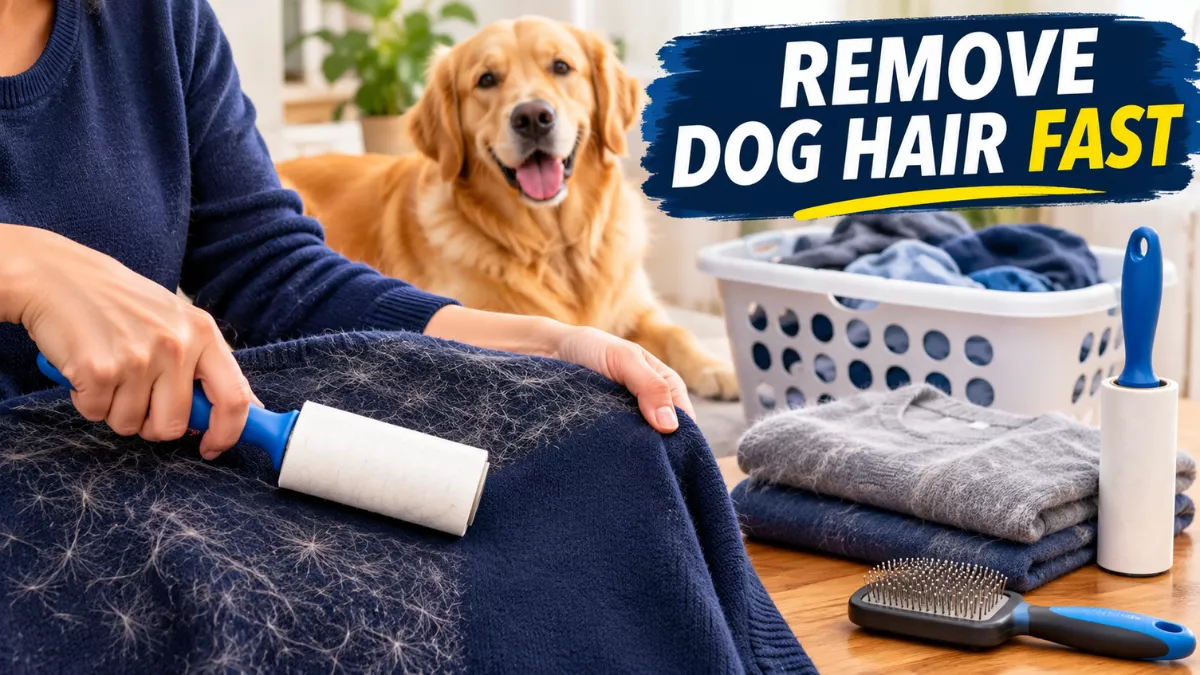
Dog hair on clothes is a common problem for pet owners. Whether you have a fluffy Golden Retriever, a short-haired Beagle, or a shedding German Shepherd, loose fur can cling to shirts, trousers, jackets, and other fabrics. Even after washing, some dog hair may remain stuck to your favorite outfits.
The good news is that you do not need expensive equipment to remove most pet hair. With a few simple household tools and the right laundry techniques, you can make your clothes look cleaner and reduce the amount of fur that sticks to them.
Here are 10 practical ways to remove dog hair from clothes, along with tips to prevent fur from building up in the first place.
1. Use a Lint Roller
A lint roller is one of the easiest tools for removing dog hair from clothing. Its sticky sheets pick up loose fur from T-shirts, trousers, sweaters, and other everyday garments.
How to use it:
- Lay the garment on a flat surface.
- Roll over the fabric using short, firm strokes.
- Replace the adhesive sheet when it becomes covered with fur.
- Pay extra attention to sleeves, pockets, and areas where your dog rests against you.
A lint roller is especially useful before leaving home. For reusable options, consider a washable lint brush designed for pet hair.
2. Try a Damp Rubber Glove
A household rubber glove can help collect dog hair from many fabric surfaces. Slight moisture and friction help gather loose fur into small clumps that are easier to remove.
Put on a clean rubber glove, lightly dampen it, and move your hand across the clothing in one direction. Rinse away the collected hair as needed.
Avoid soaking delicate garments. Test the method on a hidden area first, particularly when working with fabrics that may water-spot or change texture.
3. Use a Pet Hair Removal Brush
Pet hair removal brushes are designed to lift fur from clothing, upholstery, and other fabric surfaces. Many reusable models work without adhesive sheets, making them a practical option for regular use.
Brush in the direction recommended by the manufacturer and clean the tool frequently so the collected fur does not transfer back onto the garment.
For wool, knitwear, and delicate materials, choose a brush specifically approved for that fabric. Aggressive brushing can cause pilling or damage.
4. Shake Clothes Before Washing
One simple step can make laundry day easier: shake garments outdoors before putting them in the washing machine.
Hold each item firmly and shake it several times to loosen surface hair. You can also use a soft clothing brush to remove fur that remains attached.
This step helps reduce the amount of dog hair entering your washer, where it might otherwise collect on other clothes or inside the machine.
5. Use a Dryer Before Washing, When Fabric Allows
For suitable, dryer-safe garments, a short tumble in the dryer with no heat or a low-heat setting may loosen some dog hair before washing.
Place the clothes in the dryer and use a brief cycle appropriate for the fabric. Clean the lint filter afterward, as it may collect loose fur.
Important: Check the garment’s care label before using a dryer. Some materials can shrink, stretch, or become damaged by heat or tumbling. Do not use this method for clothing that is labeled not to tumble dry.
6. Wash Clothes With the Right Laundry Routine
Washing can remove some remaining dog hair, but heavily fur-covered clothes should be pre-cleaned first.
Follow these steps:
- Remove as much loose hair as possible with a lint roller or brush.
- Separate heavily fur-covered items from other laundry.
- Avoid overloading the washing machine.
- Use the detergent amount recommended for your load and machine.
- Select the appropriate wash cycle for the fabric.
- Check the drum and rubber seal for accumulated hair after washing.
If hair remains, remove it before drying the garment. Heat can make some residue harder to deal with, and drying a fur-covered load may spread hair to other items.
7. Use a Pet Hair Laundry Aid
Reusable laundry balls or products marketed for pet hair may help collect some loose fur during washing or drying. Their effectiveness varies depending on the product, fabric, machine, and amount of hair.
Follow the product instructions and avoid assuming that a laundry aid will replace brushing or pre-cleaning.
Be cautious with home remedies involving chemicals or improvised additives. Do not mix cleaning products, and never use an additive unless it is suitable for your appliance and clothing.
8. Try a Microfiber Cloth
A clean microfiber cloth can help pick up loose dog hair from certain smooth or tightly woven fabrics. Lightly dampen the cloth if appropriate, then wipe the garment gently in one direction.
This method works best for light surface hair and quick touch-ups. It may be less effective on thick sweaters, fleece, and textured fabrics where fur becomes deeply embedded.
Wash the microfiber cloth separately when practical so the collected hair does not transfer to other laundry.
9. Use Tape for Small Areas
If you do not have a lint roller, ordinary packaging tape or another suitable adhesive tape can help remove hair from small areas.
Wrap a piece of tape around your fingers with the sticky side facing outward. Gently press it onto the fabric and lift it away. Repeat with a clean section of tape as needed.
Use caution with silk, delicate knits, leather, and fabrics with loose fibers. Strong adhesive can pull threads, leave residue, or damage the surface. Test an inconspicuous area first.
10. Prevent Dog Hair From Sticking to Clothes
Removing dog hair is easier when you reduce shedding and limit contact with clean clothing.
Try these habits:
- Brush your dog regularly: Use a grooming tool suited to your dog’s coat type.
- Wash pet bedding: Follow the bedding’s care instructions to reduce loose fur around the house.
- Keep clean clothes covered: Store freshly washed garments in drawers or closets rather than leaving them on furniture.
- Use washable furniture covers: These can reduce fur transfer from sofas and chairs.
- Keep a lint roller nearby: Store one near the front door or in your car for quick touch-ups.
- Clean laundry equipment: Check the lint filter, drum, and washer seal regularly, following the appliance manufacturer’s instructions.
If your dog suddenly begins shedding much more than usual or develops bald patches, itching, or irritated skin, consult a veterinarian.
Frequently Asked Questions
1. What is the fastest way to remove dog hair from clothes?
A lint roller is usually the quickest option for everyday clothing. A reusable pet hair brush or a slightly damp rubber glove can also work well.
2. Does washing clothes remove dog hair?
Washing may remove some loose fur, but it does not always eliminate hair embedded in fabric. Remove as much hair as possible before washing for better results.
3. Should I put dog-hair-covered clothes in the dryer?
For dryer-safe garments, a short no-heat or low-heat cycle may loosen some fur. Check the care label, clean the lint filter afterward, and remove heavy surface hair first.
4. How do I remove dog hair from black clothes?
A lint roller, pet hair brush, or suitable reusable lint remover can be effective on dark clothing. Inspect the garment under good lighting before wearing it.
5. Why does dog hair stick so tightly to clothes?
Fabric texture, static electricity, and the shape of individual hairs can make fur cling to clothing. Fleece, knits, and other textured materials may trap hair more readily than smooth fabrics.
Final Thoughts
Dog hair does not have to ruin your favorite clothes. A lint roller, rubber glove, pet hair brush, or careful laundry routine can make a noticeable difference. For the best results, remove loose fur before washing, choose cleaning methods that suit the fabric, and keep your dog’s bedding and grooming routine under control.
With a few consistent habits, you can spend less time cleaning clothes and more time enjoying life with your dog.
Jessica is a passionate food content writer who loves exploring delicious recipes, culinary trends, and cooking tips. She creates engaging, easy-to-follow content that inspires readers to discover new flavors and enjoy the art of cooking.