
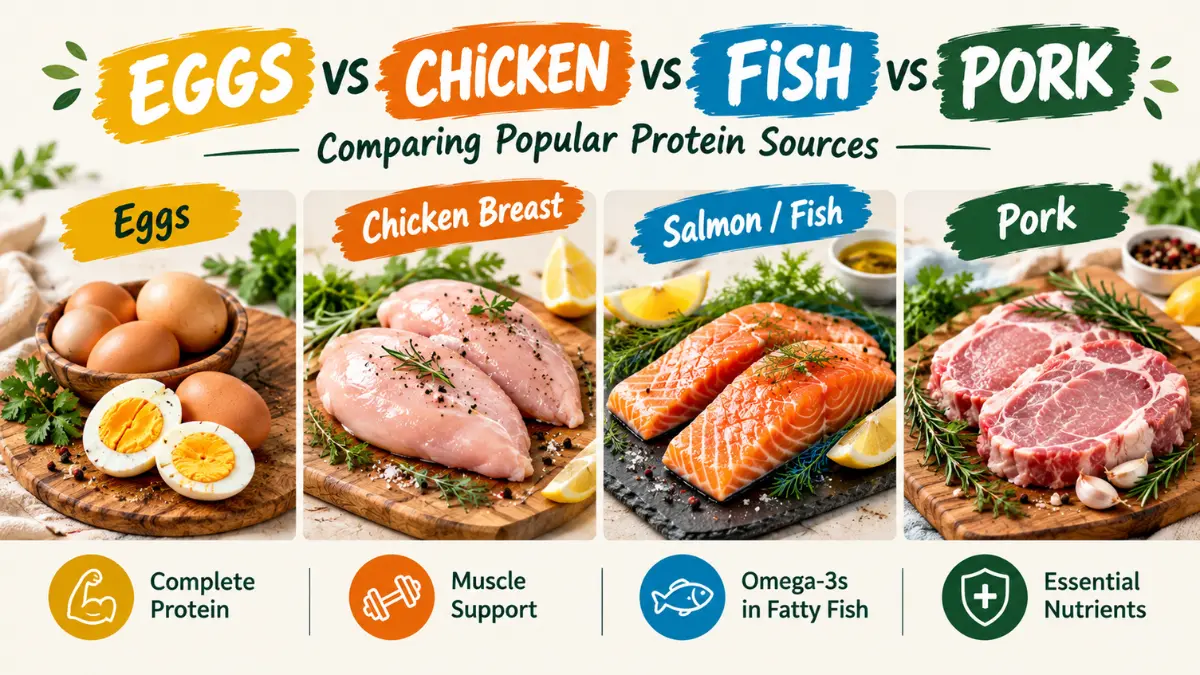
Eggs, chicken, fish and pork are all complete proteins. Each one delivers every essential amino acid, which your body uses to repair tissue, build muscle, make hormones and keep hunger in check. Where they differ is in the type of fat they carry, the vitamins and minerals they bring, and what usually happens to them in the kitchen.
Eggs are affordable, fast to cook and rich in vitamins. Skinless chicken breast is the classic lean choice for anyone counting calories. Fish, especially oily fish, is the best source of omega-3 fats for the heart and brain. Pork gets a mixed reputation: a trimmed loin is a very good protein, while bacon and sausages are a different story.
There’s no single winner for everyone, because your goals, budget and cooking style all play a part. The table gives a quick comparison, and the sections below explain what to take from it.
Nutrition Comparison
| Food | Calories | Protein | Total fat | Saturated fat | Notable nutrients |
|---|---|---|---|---|---|
| Whole eggs | ~155 | ~13 g | ~11 g | ~3.3 g | Choline, B12, vitamin D, lutein |
| Chicken breast (no skin) | ~165 | ~31 g | ~3.6 g | ~1 g | Niacin, B6, selenium |
| Salmon | ~206 | ~22 g | ~12 g | ~2.5 g | Omega-3s, vitamin D, B12 |
| Cod | ~105 | ~23 g | under 1 g | ~0.2 g | Iodine, selenium, B12 |
| Pork tenderloin | ~143 | ~26 g | ~3.5 g | ~1.2 g | Thiamine, zinc, selenium |
Approximate values per 100 g, cooked. Numbers vary by cut, brand and cooking method.
The takeaway: lean chicken, white fish and trimmed pork all give you a lot of protein for very little fat.
Eggs
Why they’re good. Few foods pack so many nutrients into so few calories. Eggs supply choline for brain and liver health, plus vitamin B12 and the eye-friendly pigments lutein and zeaxanthin. They’re also cheap, quick and satisfying.
What to watch. A large egg has roughly 185 mg of cholesterol. In most healthy people, saturated and trans fat raise blood cholesterol more than the cholesterol in food does. Still, if you have diabetes, heart disease or inherited high cholesterol, get your doctor’s advice on how many to eat. Remember too that eggs often arrive with bacon, butter and white toast, and those sides can matter more than the eggs.
Chicken
Why it’s good. Skinless breast is among the leanest, most protein-dense foods you can buy. It’s affordable, easy to cook and low in saturated fat, which is why it’s a staple for weight loss and muscle gain.
What to watch. Thighs and drumsticks contain more fat, though that isn’t a problem in moderation. The bigger risks are keeping the skin on, deep frying and sugary or creamy sauces. Chicken breast also has fewer omega-3s than fish.
Fish
Why it’s good. Fish has the best evidence for heart and brain benefits. Salmon, sardines, mackerel and trout are rich in the omega-3s EPA and DHA, which are associated with lower triglycerides and better cardiovascular health. They’re also one of the few natural sources of vitamin D. White fish like cod and haddock give you plenty of protein for very few calories.
What to watch. Large predatory fish such as swordfish, shark and king mackerel can contain higher mercury levels, so pregnant women and young children should eat them sparingly. Battered, deep-fried fish also loses much of its health advantage.
Pork
Why it’s good. Lean cuts like tenderloin and loin chops are close to chicken breast in protein and fat. Pork is an especially good source of thiamine (vitamin B1), which helps turn food into energy, and it also provides zinc and selenium.
What to watch. No other food on this list varies as much. Tenderloin is lean, but belly, ribs and sausages are high in saturated fat. Bacon, ham and sausages are processed meats, and eating a lot of them is linked to a higher risk of bowel cancer and heart disease. Fresh lean pork and cured pork shouldn’t be lumped together.
How You Cook It Matters Most
- Better choices: baking, grilling, poaching, steaming, or stir-frying with a small amount of oil.
- Cut back on: deep frying, thick breading, sugary glazes and heavily charred meat.
- Keep occasional: bacon, sausages, ham and salami.
- Rule of thumb: fresh and lean beats cured and fatty, whichever animal it comes from.
So Which Should You Pick?
For general health, here’s a reasonable order:
- Fish, particularly oily fish once or twice a week, for omega-3s and vitamin D.
- Eggs, which are nutrient-rich, budget-friendly and flexible for most healthy people.
- Skinless chicken, for lean protein with little saturated fat.
- Lean fresh pork, which is nutritious but easy to get wrong with fatty or processed cuts.
Variety is the best strategy: fish a few times a week, eggs and chicken as everyday staples, lean pork now and then, and processed meats as rarely as you can.
If you have kidney disease, gout, high cholesterol or another medical condition, ask a doctor or dietitian which proteins and portion sizes are right for you.
FAQs
How many eggs a day is okay?
For most healthy adults, one or two a day can fit into a balanced diet. People with diabetes, heart disease or high LDL cholesterol should get personal advice.
Is chicken healthier than pork?
Not necessarily. Skinless chicken breast is very lean, but pork tenderloin is almost as lean. What counts is choosing fresh, trimmed cuts and avoiding processed ones.
How often should I eat fish?
Most health guidelines suggest about two servings a week, with at least one being oily fish like salmon or sardines. Pregnant women and young children should choose low-mercury types.
What’s best for weight loss?
Chicken breast, white fish and eggs all give lots of protein for few calories, which helps you feel full. How you cook them matters more than which you choose, so grilled or baked beats fried.
Jessica is a passionate food content writer who loves exploring delicious recipes, culinary trends, and cooking tips. She creates engaging, easy-to-follow content that inspires readers to discover new flavors and enjoy the art of cooking.