
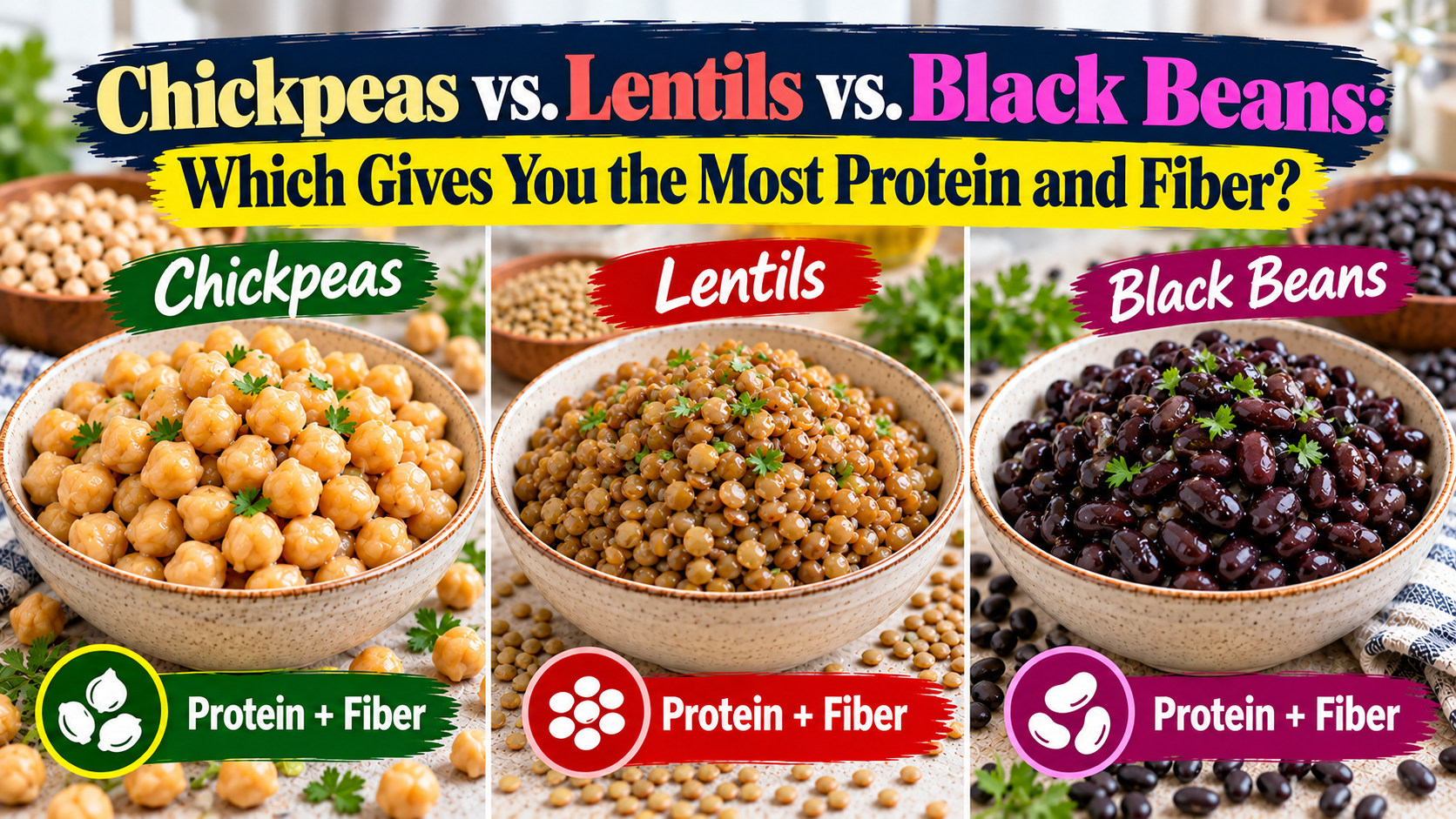
Chickpeas, lentils, and black beans are cheap, filling, and packed with plant protein, so it’s easy to treat them as interchangeable. They aren’t quite.
Each one comes out ahead on a different nutrient, and each works best in different dishes. Here’s how they compare, using standard USDA-based figures for boiled legumes (no salt added) per 100 grams.
Lentils have the most protein, the fewest calories, and the most folate
Lentils edge out the other two on protein, with about 9.0 grams per 100 grams cooked, though the gap is tiny. Where they pull ahead more clearly is calories (about 116, the lowest of the three), iron (about 3.3 mg), and folate (about 181 µg). They also cook fastest, usually in 15 to 25 minutes with no soaking.
The trade-off is texture: lentils soften quickly and can turn mushy, so they suit soups, stews, and dals better than salads, unless you use firmer varieties like green or French lentils.
Black beans are the richest in fiber and magnesium
Black beans lead the group for fiber, at about 8.7 grams per 100 grams cooked, compared with 7.9 grams in lentils and 7.6 grams in chickpeas. They’re also the highest in magnesium, at roughly 70 mg. Their dark skins contain anthocyanins, the same type of antioxidant found in blueberries.
The downside is that black beans have the lowest iron of the three, at about 2.1 mg, and like most dried beans they need soaking and a longer cook time unless you use canned.
| Nutrient (per 100g cooked) | Chickpeas | Lentils | Black Beans |
|---|---|---|---|
| Calories | ~164 | ~116 | ~132 |
| Protein | ~8.9 g | ~9.0 g | ~8.9 g |
| Fiber | ~7.6 g | ~7.9 g | ~8.7 g |
| Iron | ~2.9 mg | ~3.3 mg | ~2.1 mg |
| Folate | ~172 µg | ~181 µg | ~149 µg |
| Magnesium | ~48 mg | ~36 mg | ~70 mg |
| Standout benefit | Versatile, creamy or crunchy | Fastest cooking, most iron and folate | Most fiber and magnesium |
Chickpeas are the most versatile
Chickpeas don’t win any single category, but they come close on all of them. They provide about 8.9 grams of protein and 7.6 grams of fiber per 100 grams, along with good amounts of folate and manganese. They’re also the most calorie-dense of the three, at about 164 per 100 grams, partly because they contain a little more fat.
Their real strength is flexibility: you can blend them into hummus, roast them for a crunchy snack, toss them into salads, or simmer them in curries. The trade-off is that they take the longest to cook from dry, so many people rely on canned.
How to get more from all three
You don’t have to choose just one. A few ideas:
- Mix lentils into a chickpea curry to add iron and make it cook down thicker
- Add black beans to salads and bowls for extra fiber and magnesium
- Squeeze lemon or add tomatoes to lentil dishes, since vitamin C helps your body absorb plant iron
- Rinse canned beans well to cut sodium by a large amount
- Cook a big batch of dried beans or lentils once and freeze it in portions
So which gives you the most protein and fiber?
For protein, the three are nearly tied, with lentils a hair ahead. For fiber, black beans win. If you want the lightest, fastest, iron-rich option, choose lentils. If you want the most flexible ingredient for snacks and sauces, chickpeas are your best bet. The simplest answer is to rotate all three through the week, since the nutritional differences are small and the variety helps.
FAQs
Q: Which has more protein, chickpeas, lentils, or black beans?
Lentils have the most at about 9.0 grams per 100 grams cooked, but chickpeas and black beans are almost identical at roughly 8.9 grams each.
Q: Which has the most fiber?
Black beans have the most, at about 8.7 grams per 100 grams cooked, followed by lentils at 7.9 grams and chickpeas at 7.6 grams.
Q: Are canned beans as healthy as dried?
They’re nutritionally similar. Canned versions can be high in sodium, so choose low-sodium cans or drain and rinse them well.
Q: Why do beans cause gas, and can I reduce it?
Beans contain fermentable carbohydrates that gut bacteria break down. Soaking dried beans, rinsing canned ones, and increasing portions gradually can help.
This article is for general information and isn’t a substitute for medical advice. If you have a medical condition affecting your diet, check with your doctor or dietitian.
Jessica is a passionate food content writer who loves exploring delicious recipes, culinary trends, and cooking tips. She creates engaging, easy-to-follow content that inspires readers to discover new flavors and enjoy the art of cooking.