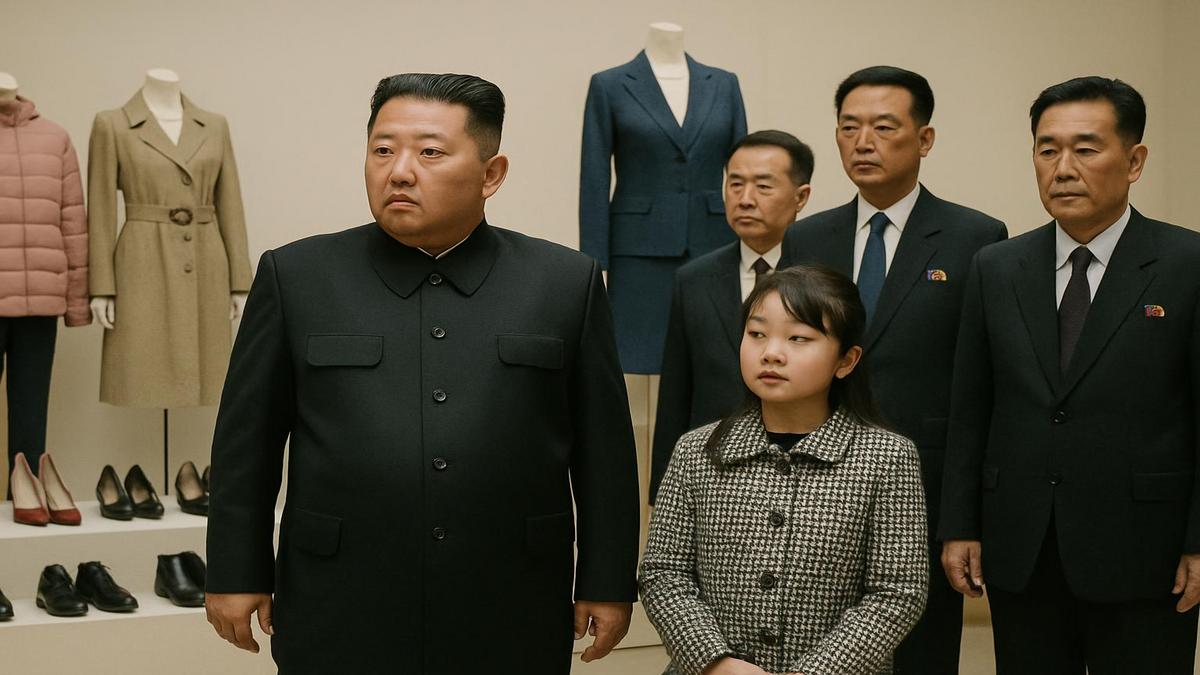
Recent rumors about North Korean leader Kim Jong Un’s death due to brain hemorrhage have been strongly contradicted by fresh official North Korean media photos showing him attending a public event with his daughter. Meanwhile, rising military tensions on the Korean Peninsula have led South Korea to propose urgent military talks to prevent accidental conflict along their heavily fortified border.
Kim Jong Un’s Health Rumors Discredited by Official Imagery
On October 19, 2026, the North Korean state media published images of Supreme Leader Kim Jong Un appearing in good health at a national clothing and footwear exhibition in Pyongyang, accompanied by his daughter Kim Ju Ae and senior officials. This latest appearance contradicts unverifiable claims made by an exiled Chinese dissident alleging that Kim had suffered a brain hemorrhage, was hospitalized in Beijing, and had died. Such claims have become routine due to the secretive nature of North Korea, with previous false death reports despite Kim’s actual public appearances[1].
Experts note that if Kim’s health were seriously compromised, neighboring countries would likely detect signs through increased border security or diplomatic activity. None of these indicators have emerged. South Korean intelligence has also denied any supporting evidence[1].
Uncertainty Over Leadership Succession Adds to Speculation
South Korean analysts suggest that the persistence of death rumors stems partly from uncertainties about Kim’s succession. The 42-year-old leader’s daughter, around 13 years old, has been increasingly visible at official events, sparking speculation she may be groomed as an heir, although female leadership is unprecedented in North Korea’s Kim dynasty. His sister, Kim Yo Jong, has also recently asserted her influence publicly, which some interpret as positioning herself in power dynamics[1].
Escalating Military Tensions Along the Korean Border
As these rumors circulated, Kim Yo Jong issued a bold warning to South Korea, describing the upcoming activation of loudspeakers along the 160-mile border for anti-South Korean propaganda broadcasts. She characterized the situation as a “clear warning” rather than a threat and accused Seoul of interfering in North Korean affairs. North Korean troops have reportedly taken up fortified positions along the border, with exchanges of warning shots and broadcasts between the two Koreas[4].
South Korea has acknowledged firing warning shots in self-defense and has condemned recent North Korean landmine blasts that injured three South Korean soldiers. Seoul’s Ministry of National Defense insists the blast area is not disputed territory[5].
South Korea Proposes Military Talks to Ease Tensions
In response to heightened tensions and border incidents, South Korea has formally proposed military talks with North Korea to clarify the contested Military Demarcation Line location, restore military communication channels, and prevent accidental clashes in frontline areas. The proposal includes the possibility of trilateral talks involving the U.S.-led United Nations Command. However, North Korea has yet to respond, consistent with its recent suspension of nearly all dialogue with the South[5].
International Context: Military Buildup and Russia Alliance
The region’s tensions are compounded by an ongoing arms race, with North Korea rapidly enhancing its conventional and nuclear capabilities. Its recent military partnership with Russia has allowed the testing of advanced missile and drone technologies in combat conditions, intensifying security concerns in South Korea and the United States. The physical fortification of the border includes additional fences, minefields, and barriers, raising the stakes for any inadvertent conflict[7].
Conclusion: Why This Matters
The debunking of Kim Jong Un’s death rumors via official photos provides reassurance over the regime’s continuity but does not eliminate geopolitical risks on the peninsula. Rising military tensions and aggressive rhetoric risk accidental escalation in one of the world’s most militarized regions. The South Korean government’s call for dialogue aims to stabilize the volatile situation, yet uncertainty remains concerning North Korea’s future leadership and ambitions.
Given the difficulty in independently verifying North Korean events, international intelligence agencies closely monitor developments. The situation highlights the need for cautious diplomacy and reliable information to reduce the risk of miscalculation with global implications.
Article based on reporting by BBC and Associated Press with analytical context.


Jessica is a passionate food content writer who loves exploring delicious recipes, culinary trends, and cooking tips. She creates engaging, easy-to-follow content that inspires readers to discover new flavors and enjoy the art of cooking.