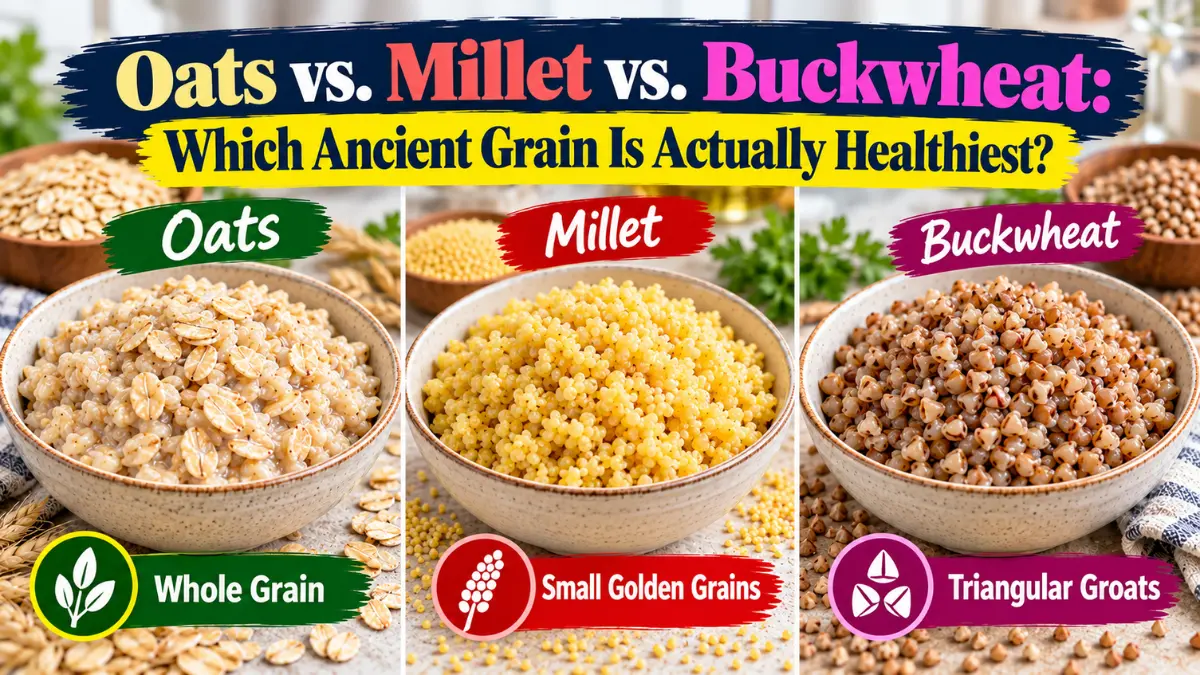
Oats, millet, and buckwheat are often grouped together as “ancient grains,” and all three show up on healthy-eating lists. They aren’t the same, though.
Each stands out for different nutrients, so the healthiest pick depends on what you want more of: heart-friendly soluble fiber, minerals, or a gluten-free staple with a nutty bite. Here’s how they compare, using standard USDA-based figures for cooked grains per 100 grams.
Buckwheat is the richest in fiber and magnesium
Despite the name, buckwheat isn’t related to wheat. It’s technically a seed, which is why it’s called a pseudocereal. Cooked buckwheat groats provide about 2.7 grams of fiber per 100 grams, ahead of oats at 1.7 grams and millet at 1.3 grams.
It’s also the highest in magnesium at roughly 51 mg and contains rutin, a plant compound studied for its role in blood vessel health. It’s naturally gluten-free, with a bold, earthy flavor. The trade-off is that the taste is strong, and some people don’t enjoy it at first. A small number of people are also allergic to buckwheat.
Oats lead on beta-glucan and are the easiest to eat
Oats are the most familiar of the three, and their main claim to fame is beta-glucan, a soluble fiber linked to lower LDL cholesterol and steadier blood sugar. Cooked oats are the lightest option at about 71 calories per 100 grams, though that’s mostly because they absorb a lot of water, so a typical bowl contains more oats than the figure suggests. They’re affordable, available everywhere, and fast to prepare. One caution: oats are naturally gluten-free but are often processed alongside wheat, so anyone with celiac disease should buy oats labeled gluten-free.
Millet is mild, gluten-free, and high in folate
Millet is the quietest of the three in flavor, with a light, slightly sweet taste similar to couscous or rice. It provides about 3.5 grams of protein per 100 grams cooked, the highest of the group by a small margin, along with roughly 19 µg of folate and a good amount of magnesium at about 44 mg. It’s naturally gluten-free and easy to digest for most people.
The downside is that it has the lowest fiber of the three, at about 1.3 grams, and it’s a little higher in calories at roughly 119 per 100 grams. People with thyroid conditions are sometimes advised to eat millet in moderation, so it’s worth checking with a doctor if that applies to you.
| Nutrient (per 100g cooked) | Oats | Millet | Buckwheat |
|---|---|---|---|
| Calories | ~71 | ~119 | ~92 |
| Protein | ~2.5 g | ~3.5 g | ~3.4 g |
| Fiber | ~1.7 g | ~1.3 g | ~2.7 g |
| Magnesium | ~27 mg | ~44 mg | ~51 mg |
| Folate | ~6 µg | ~19 µg | ~14 µg |
| Standout benefit | Beta-glucan fiber, easy and affordable | Mild flavor, gluten-free, folate | Fiber, magnesium, rutin |
Note: Oats are cooked in water and absorb more of it than millet or buckwheat do, which is why their per-100g numbers look lower. Compared as dry grains, oats are much more nutrient-dense.
How to get more from all three
You don’t have to pick a single winner. A few ideas:
- Cook oats with a spoonful of buckwheat groats for extra fiber and crunch
- Use millet as a base for grain bowls, in place of white rice
- Toast buckwheat in a dry pan for a few minutes before cooking to soften its earthy flavor
- Top any of the three with nuts, seeds, or yogurt to add protein and healthy fats
- Cook a large batch and refrigerate it in portions for quick breakfasts and lunches
So which grain is actually healthiest?
If you want the most fiber and magnesium, buckwheat is the best pick. If you want cholesterol-friendly beta-glucan and the easiest, cheapest option, go with oats. If you want a mild, versatile gluten-free grain with a bit more protein and folate, millet is the best bet. There’s no single winner, so rotating all three through your week is the simplest way to cover more nutritional ground.
FAQs
Q: Which has the most fiber, oats, millet, or buckwheat?
Buckwheat has the most per 100 grams cooked, at about 2.7 grams, compared with roughly 1.7 grams in oats and 1.3 grams in millet.
Q: Are oats, millet, and buckwheat gluten-free?
Millet and buckwheat are naturally gluten-free. Oats are too, but they’re often cross-contaminated during processing, so look for a gluten-free label if you need to avoid gluten.
Q: Which is best for weight loss?
All three can fit into a weight-loss plan. Oats and buckwheat have the most fiber, which helps you feel full, so portion size and what you add to the bowl matter most.
Q: Is buckwheat really a grain?
Not botanically. Buckwheat is a seed from a plant related to rhubarb, but it’s cooked and eaten like a grain, so it’s commonly grouped with them.
This article is for general information and isn’t a substitute for medical advice. If you have a medical condition affecting your diet, check with your doctor or dietitian.
Jessica is a passionate food content writer who loves exploring delicious recipes, culinary trends, and cooking tips. She creates engaging, easy-to-follow content that inspires readers to discover new flavors and enjoy the art of cooking.